Is OpenAI’s ChatGPT good for translating among all languages?
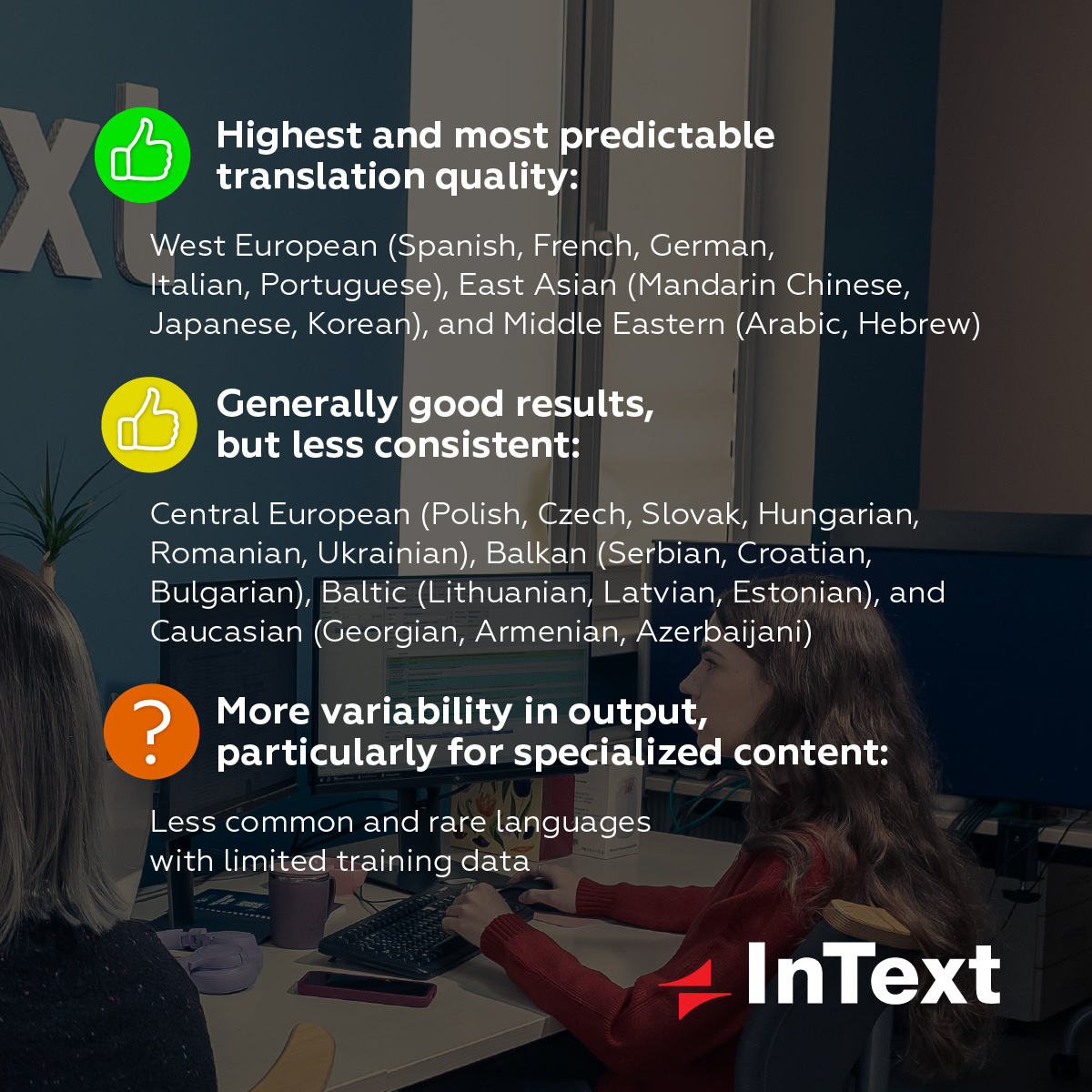
The ChatGPT user interface supports 50+ languages. But for everyday use and localization tasks, it can handle many more, as it was trained on large multilingual datasets. The more widely used a language and the more content exists in it, the more training data is available to ChatGPT or other LLMs — and the more reliable and natural the output quality.
Based on our research and experience working with multilingual content, here’s a rough breakdown of localization quality by language group:
You can test ChatGPT’s translation ability across languages directly on your bilingual files in our Hera AI software. For less common language pairs, using English as a pivot language can improve consistency.